01
Inspection first
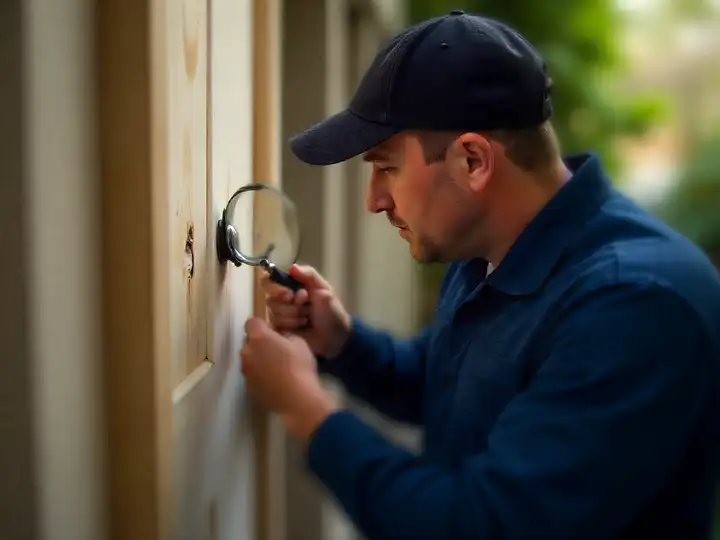
Roof void, walls and subfloor checked to find how rodents are getting in.

Rodent Proofing in Melbourne means finding every gap a rat or mouse can squeeze through, sealing it with materials they cannot chew, and clearing the rodents already inside. We handle homes, cafes and warehouses across the inner and south-eastern suburbs. If you are hearing scratching in the ceiling at 2am, or finding droppings behind the fridge, we can be there today.
Roof void, walls and subfloor checked to find how rodents are getting in.
You see what we found and the plan before any work starts.
Gaps proofed with steel mesh and sealant, not just bait.
Lockable, tamper-resistant stations placed with kids and pets in mind.
Rodent Proofing in Melbourne is the physical work of closing a building against rats and mice, not just poisoning the ones inside. A rat needs a gap the width of a 20-cent coin; a mouse needs one the size of a pencil. We inspect the roof void, subfloor, wall cavities, eaves, weep holes, pipe penetrations and garage doors, then seal each opening with steel wool, copper mesh, wire mesh, cement mortar or expanding foam. Anything chewed through gets replaced with a material they cannot get their teeth into.
Melbourne's older housing stock is the main reason this work is in constant demand. Federation and Edwardian homes in Hawthorn, Kew and Malvern were built with wide eaves, timber subfloors and unsealed cavity walls, and rats use the same routes for decades. Add a wet winter pushing them indoors and a warm roof void in summer, and you get noise in the ceiling, gnawed wiring and rat droppings in the pantry. That is when most people start searching for rat proofing near me Melbourne and want it sorted the same week.

We book a two-hour window and turn up inside it. The technician walks the property with you, checking the roof void, subfloor, eaves, meter box, garage and every pipe penetration. You get photos of each entry point and a clear explanation of what is getting in and where.
Proofing a building with rats still inside just traps them in the walls. We set snap traps, live catch traps and bait stations in the roof void and subfloor first, using APVMA-approved rodenticide in tamper-resistant stations where pets or kids are around. Most active infestations clear in three to seven days.
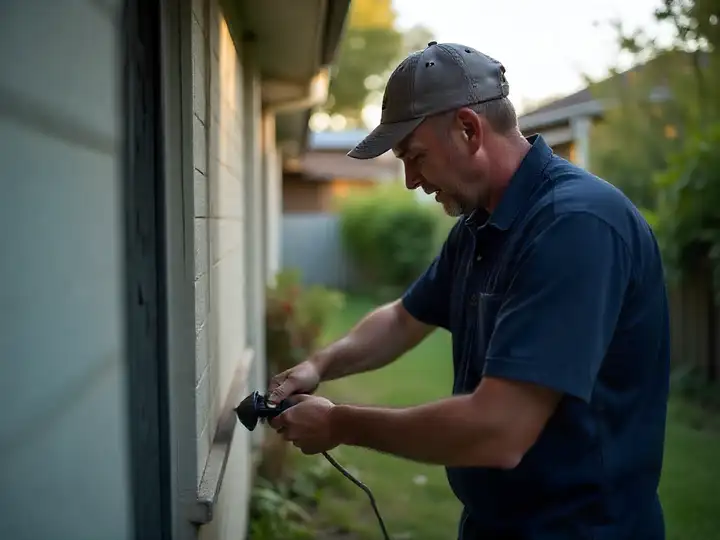
This is the core of the job. We pack gaps with steel wool and copper mesh, mortar around pipework, fit wire mesh over weep holes and vents, and seal gaps under doors with brush strips. Expanding foam goes into irregular voids, always behind mesh so rodents cannot chew straight through it.
Droppings, urine trails and nesting material get removed and treated. If there is a dead rat in a cavity, we locate it with thermal imaging and take it out. This is the step that gets rid of the smell and the health risk, and it usually takes one to two hours on a standard home.
We return after 14 days to check the seals, refresh bait stations and confirm there is no fresh activity. If rodents get back in through a point we sealed, we come back and fix it at no charge under our 12-month workmanship warranty.
Used to find nesting sites, warm rodent bodies and dead rats inside wall cavities and roof voids without cutting exploratory holes. Cuts inspection time and avoids unnecessary damage to plaster and cornices.
Let us see into subfloor spaces, behind appliances and along wall cavities where a torch alone will not reach. Essential for confirming entry points in older Melbourne homes with tight access.
For applying expanding foam, cement mortar and sealant cleanly around pipe penetrations, weep holes and irregular gaps. Neat application means the repair lasts and looks like part of the building.
Used to clear active rodents before sealing, so we are not trapping them inside the walls. Live catch traps suit situations where pets or children are present and a kill method is not appropriate.
Lockable stations that hold rodenticide bait blocks safely away from pets, children and food handling areas. Required for most commercial kitchens and recommended for any home with dogs or cats.
The core proofing materials. Copper mesh does not rust and cannot be chewed through, and steel wool packed tightly behind it blocks gaps around pipes, cables and irregular openings.
Wire mesh covers weep holes, vents and larger openings, while expanding foam fills irregular voids. We always back foam with mesh so rodents cannot chew straight through the foam alone.
We treat the cause rather than just the symptom: inspect, seal, monitor and follow up. Chemical use is limited to tamper-resistant bait stations where needed, and the focus stays on physical exclusion so results last longer than a single baiting round.
Every gap over 10mm is photographed, logged and sealed, and you receive the record. This gives you a documented baseline for the property and makes future inspections faster and cheaper.
All rodenticide we use is approved by the Australian Pesticides and Veterinary Medicines Authority and applied by licensed technicians. Bait blocks are secured inside stations so they cannot be moved into living areas or eaten by pets.
We return two weeks after the initial job to check every seal, refresh bait stations and confirm there is no fresh activity. If rodents have pushed through a point we sealed, we fix it at no charge under our 12-month workmanship warranty.
We do a full inspection of the roof void, subfloor and wall cavities, seal any existing entry points, and give you a written report with photos. If there is active activity, we clear it before you move your furniture in. You move into a sealed house with no surprises, and a documented record of what was done and when.
Disturbance pushes rodents into surrounding buildings. We inspect the boundary side of your property first, seal the entry points they are using, and set bait stations along the fence line and in the roof void. Activity stops within a week and the seals hold once the neighbouring construction finishes.
We schedule the work outside trading hours, seal loading docks, store rooms and grease trap areas, install lockable bait stations, and provide documentation of the treatment for your records. You pass the inspection with paperwork to show what was done, and your staff work in a clean, sealed kitchen.
Recurring activity almost always means entry points were never sealed. We inspect the building itself rather than just setting more bait, then close the gaps with copper mesh, mortar and wire mesh. The cycle stops. You are not paying for another round of baiting every year.
The owner had been hearing scratching above the bedroom for six weeks and had already paid for one baiting round that did nothing. We found four entry points along the eaves and a gap around the hot water service pipe, plus fresh droppings through the roof void.
We removed two rats, sealed all four entry points with copper mesh and mortar, and treated the contaminated insulation. The 14-day follow-up showed zero fresh activity. Total job time was three hours on site plus the return visit.
Maintenance: An annual roof void check before winter keeps the seals sound. The owner now books a quick inspection each April, which takes under an hour.
A cafe owner had seen a rat near the loading dock twice in a fortnight and had a council inspection booked in ten days. The store room had a gap under the roller door and an unsealed grease trap penetration.
We sealed the roller door with a brush strip, mortared the grease trap penetration, and installed four lockable bait stations. The inspection passed with no findings, and no rodents were seen in the following three months.
Maintenance: Bait stations are checked every eight weeks as part of the maintenance plan, and the roller door seal is inspected quarterly.
A 1920s home had rats in the subfloor for months. Droppings were visible near the laundry, and there was a persistent smell under the house. The owner had tried supermarket bait with no result.
We located the nest with thermal imaging, removed three rats and the nesting material, sealed six entry points around pipework and the subfloor vents, and sanitised the area. The smell cleared in two days and there has been no activity since.
Maintenance: Subfloor vents are checked each spring, and garden beds are kept clear of the brickwork so rats lose their cover.

Our technicians hold licensed pest control technician registration, public health licensing, chemical handling certificates and Integrated Pest Management (IPM) certification, and we work to Work Health and Safety (WHS) compliance on every site. We have proofed weatherboard cottages, brick Edwardians, 1970s brick veneers, apartment basements and commercial kitchens across Melbourne's inner and south-eastern suburbs. That local experience matters, because a rat in a Hawthorn roof void behaves differently to one in a Brighton beach house with a suspended concrete slab. We know which materials last in Melbourne conditions and which ones fail within a season.
The price depends on the number of entry points, roof access difficulty and whether baiting or dead rat removal is needed. You get a fixed quote before we start, and the 14-day follow-up inspection is included.
A full inspection of the roof void, subfloor, eaves, wall cavities and pipe penetrations, sealing of every entry point over 10mm, bait stations or traps where rodents are still active, removal of droppings and nesting material, and a 14-day follow-up. You also get photos of each sealed point and a written summary of the work.
Our seals are warrantied for 12 months, and in practice most last five to ten years before normal building movement opens a new gap. Copper mesh and mortar outlast expanding foam by a wide margin. We recommend a quick annual inspection, especially after storms or renovations that disturb the roof line.
Yes. We use physical sealing as the primary method, so most of the work involves no chemicals at all. Where bait is needed, it goes into tamper-resistant bait stations placed away from pets and children, and all rodenticide is APVMA approved. We tell you exactly where every station is before we leave.
Not seeing your question? Our local team can help you understand urgency, scheduling and what to expect.
Ask the local team
Proofing works best once the active rats are gone. We trap and remove rats from roof voids, subfloors and wall cavities first, then seal the entry points so the next colony cannot move in behind them.
View service
Mice squeeze through gaps the size of a pencil, so proofing a Melbourne home for mice means sealing smaller openings than a rat job. We combine bait stations and traps with fine wire mesh and steel wool on every weep hole and pipe entry.
View service
Scratching in the ceiling is the most common call we get. We locate the nest with thermal imaging, remove the rats and nesting material, then seal the roof void entry points that let them in from the eaves and power lines.
View service
Rats in wall cavities are harder to reach and often die in place, causing a smell that lasts weeks. We use inspection mirrors and thermal cameras to find them, remove the carcass, and seal the cavity entry points at the top and bottom of the wall.
View service
Send us the form and we will book you in, usually the same day for urgent rodent work.
Tell us what you are hearing or seeing and we will give you a straight answer on what the job involves and what it will cost. No obligation, no pressure.